

Explore Japan's Destinations
Discover temples, restaurants, parks, and hidden gems across every region. Click the map to explore, or use filters to find your perfect destination.
Find Your Perfect Destination
60 destinations match your criteria
Ainodake
Nature間ノ岳
Mount Aino (間ノ岳, Aino-dake), or Ainodake, is a peak of the Akaishi Mountains−Southern Alps, in Minami Alps National Park, Japan. At 3,190 m (10,466 ft), it is the third tallest peak in Japan and the second highest in the Akaishi Mountains. Its summit lies on the border of Aoi-ku and Shizuoka in Shizuoka Prefecture, and of Minami-Alps in Yamanashi Prefecture. Mount Aino is one of the landmark 100 Famous Japanese Mountains.
Akita-Komagatake
Nature秋田駒ヶ岳
Akita-Komagatake (秋田駒ヶ岳) is an active stratovolcano located 10 km east of Tazawa Lake, near the border between Akita and Iwate prefectures on Honshu Island. The volcano last erupted from 18 September 1970 to 25 January 1971. It is the highest mountain in Akita Prefecture and the second highest in Towada-Hachimantai National Park.
Aokigahara
Nature青木ヶ原
Aokigahara (青木ヶ原, 'Aucuba Tree Meadow'), also known as the Sea of Trees (樹海, Jukai), is a forest on the northwestern flank of the Mount Fuji on the island of Honshu in Japan, thriving on 30 square kilometres (12 sq mi) of hardened lava laid down by the last major eruption of Mount Fuji in 864 CE. The western edge of Aokigahara, where there are several caves that fill with ice in winter, is a popular destination for tourists and school trips. Parts of Aokigahara are very dense, and the porous lava rock absorbs sound, contributing to a sense of solitude that some visitors attribute to the forest. The forest has a historical reputation as a home to yūrei: ghosts of the dead in Japanese mythology. At least since the 1960s, Aokigahara has become associated with suicide, eventually becoming known in English by the nickname "Suicide Forest" and gaining a reputation as one of the world's most-used suicide sites. Because of this, signs at the head of some trails urge suicidal visitors to think of their families and contact a suicide prevention association.
Arakurayama Sengen Park
Nature新倉山浅間公園
park in Fujiyoshida, Japan
Asukayama Park
Nature飛鳥山公園
Asukayama Park (飛鳥山公園, Asukayama Kōen) is a public park in Kita, Tokyo, Japan.
Chausuyama
Nature茶臼山
Chausuyama (茶臼山; Mount Chausu) is a mountain located on the border between Aichi and Nagano Prefectures, with its highest point on the Aichi side. With a height of 1,415.2 metres (4,643 ft), it is the tallest peak within Aichi Prefecture. The mountain is within the borders of the Tenryū-Okumikawa Quasi-National Park. During wintertime, the area hosts a popular ski resort.
Equestrian Park
Nature馬事公苑
park in Japan
Heiwadai Park
Nature平和台公園
Heiwadai Park (平和台公園) or Miyazaki Peace Park is a municipal park in Miyazaki, Miyazaki on Japan's Kyushu Island. A popular honeymoon destination for Japanese couples, the park's Peace Tower has generated controversy because of its place in Japanese history.
Higashiyama Zoo and Botanical Gardens
Nature東山動植物園
The Higashiyama Zoo and Botanical Gardens (東山動植物園, Higashiyama Dōshokubutsuen) is a joint zoo and botanical garden located at Chikusa-ku, Nagoya, Japan. It is open every day except Monday, and charges a modest admission fee. Established in 1937, the Higashiyama Zoo is one of Asia's largest attractions, featuring a botanical garden and an amusement park. The logo for the koala exhibit was designed by manga artist Akira Toriyama in 1984. It keeps more than 450 species, which is the largest number in Japan.
Hiroshima Peace Memorial Park
Nature平和記念公園
Hiroshima Peace Memorial Park (広島平和記念公園, Hiroshima Heiwa Kinen Kōen) is a memorial park in the center of Hiroshima, Japan. It is dedicated to the legacy of Hiroshima as the first city in the world to suffer a nuclear attack at the end of World War II, and to the memories of the bomb's direct and indirect victims (of whom there may have been as many as 140,000). The Hiroshima Peace Memorial Park is visited by more than one million people each year. The park is there in memory of the victims of the nuclear attack on August 6, 1945, in which the United States dropped an atomic bomb on the Japanese city of Hiroshima. The Hiroshima Peace Memorial Park was planned and designed by the Japanese Architect Kenzō Tange at Tange Lab.
Kaminarimon
Nature雷門
The Kaminarimon (雷門; lit."Thunder Gate") is the outer of two large entrance gates that ultimately leads to the Sensō-ji (the inner being the Hōzōmon) in Asakusa, Tokyo, Japan. The gate, with its lantern and statues, is popular with tourists. It stands at 11.7 m tall, 11.4 m wide and covers an area of 69.3 m2. The first gate was built in 941, but the current gate dates from 1960, after the previous gate was destroyed in a fire in 1865.
Kinkeizan
Nature金鶏山
Mount Kinkei (金鶏山, Kinkei-san or Kinkei-zan) is a conical hill in the town of Hiraizumi in southwestern Iwate Prefecture, Japan. The mountain is part of the UNESCO World Heritage Site Historic Monuments and Sites of Hiraizumi.
Meiji Jingu
Nature明治神宮
Meiji Shrine (明治神宮, Meiji Jingū) is a Shinto shrine in Shibuya, Tokyo, that is dedicated to the deified spirits of Emperor Meiji and his wife, Empress Shōken. The shrine does not contain the emperor's grave, which is located at Fushimi-momoyama, south of Kyoto.
Miho no Matsubara
Nature三保の松原
Miho no Matsubara (三保の松原, Pinery of Miho, Pine grove at Miho) is a scenic area on the Miho Peninsula in Shimizu Ward of Shizuoka City, Japan. Its seven-kilometre seashore is lined with pine trees. It is the location of the legend upon which the Noh drama Hagoromo is based; on the second Saturday and Sunday of October, the city of Shizuoka holds a Hagoromo Festival and a performance of the Noh drama takes place near the pine tree of the legend. It was designated as a National Places of Scenic Beauty of Japan in 1922. In 2013 the pine groves were added to the World Heritage List as part of the Fujisan Cultural Site.
Mount Aizu-Komagatake
Nature会津駒ヶ岳
Mount Aizu-Komagatake (会津駒ヶ岳, Aizu-Komagatake) is a mountain located in Hinoemata, Fukushima Prefecture, Japan, in the Oze National Park. It is one of the 100 Famous Japanese Mountains. Height: 2,133 meters (6,998 ft). Location: Fukushima Prefecture, near the border with Niigata Prefecture. Mountain Range: Echigo Mountains.
Mount Aka
Nature赤岳
mountain in Yamanashi Prefecture, Japan
Mount Akaishi
Nature赤石岳
mountain in Nagano Prefecture, Japan
Mount Amagi
Nature天城山
Mount Amagi (天城山, Amagi-san) is a range of volcanic mountains in central Izu Peninsula in Shizuoka Prefecture, Japan, forming the border between Izu City and Higashi-Izu Town. It is also referred to as the Amagi Mountain Range (天城連山, Amagi Renzan). The Amagi mountains have several peaks, the tallest of which are Bansaburōdake (万三郎岳) at 1,406 metres (4,613 ft), Banjirōdake (万二郎岳) at 1,300 metres (4,300 ft), and Tōgasayama (遠笠山) at 1,197 metres (3,927 ft). There are several hiking routes to the top. Flora in the area include rhododendrons, Japanese andromeda, stewartia monadelpha and Siebold's beech.
Mount Amakazari
Nature雨飾山
Mount Amakazari (雨飾山, Amakazari-yama) is a mountain in the Chūbu region, Central Honshu, Japan. Located between Niigata and Nagano prefectures, the mountain is considered one of the 100 Mountains of Japan. Several hiking paths lead up the mountain, along which can be found a number of natural hot springs.
Mount Amanokagu
Nature天香久山
mountain in Japan
Mount Arashima
Nature荒島岳
Mount Arashima (荒島岳, Arashima-dake) is a mountain located in Fukui Prefecture, Japan. This mountain is one of the 100 Famous Japanese Mountains.
Mount Asahi
Nature朝日岳
Mount Asahi (朝日岳, Asahidake) is a mountain located on the border of Yamagata Prefecture with Niigata Prefecture, in northern Japan. It is part of the Asahi Mountain Range, which is part of Bandai-Asahi National Park. The mountain has a peak Ō-Asahidake (大朝日岳) with a height of 1,870 metres (6,140 ft) which is wholly within Yamagata Prefecture, and a secondary peak Ko-Asahidake (小朝日岳) with a height of 1,648 metres (5,407 ft) to the northeast. Another peak in the same range, Nishi-Asahidake (西朝日岳) to the northwest has a height of 1,814 metres (5,951 ft). It is one of the mountains described in Kyūya Fukada's book 100 Famous Japanese Mountains.
Mount Ashigara
Nature金時山
Mount Ashigara (足柄山), also known as Mount Kintoki (金時山), is the northernmost peak of the Hakone caldera, on the border of Kanagawa and Shizuoka prefectures, in the Fuji-Hakone-Izu National Park in Japan. Ashigara is not a remnant of the collapse of the old Hakone volcano itself, but rather a parasitic cone growing from its flank. Mount Ashigara is the legendary birthplace of Kintarō.
Mount Daibosatsu
Nature大菩薩嶺
mountain in Japan
Mount Echigo-Komagatake
Nature越後駒ヶ岳
Mount Echigo-Komagatake or Uonuma-Komagatake (越後駒ヶ岳 or 魚沼駒ヶ岳) is a mountain located on the border of Uonuma and Minamiuonuma, Niigata Prefecture, Japan, with an elevation of 2,002.7 m (6,571 ft). It is one of the 100 famous mountains in Japan. Mount Echigo-Komagatake, along with Nakanodake and Mount Hakkai, is also one of the three great mountains of Echigo, the old name for this area of Niigata Prefecture.
Mount Ena
Nature恵那山
Mount Ena (恵那山, Ena-san) is a mountain peak of the Kiso Mountains in the Chūbu region of Japan.
Mount Fuji
Nature富士山
Mount Fuji[a] (富士山・富士の山, Fujisan, Fuji no Yama) is an active stratovolcano located on the Japanese island of Honshu, with a summit elevation of 3,776.24 m (12,389 ft 3 in). It is the highest mountain in Japan, the second-highest volcano on any Asian island (after Mount Kerinci on the Indonesian island of Sumatra), and the seventh-highest peak of an island on Earth. Mount Fuji last erupted from 1707 to 1708.
Mount Gassan
Nature月山
Mount Gassan (月山, Gassan) is a stratovolcano in the ancient province of Dewa (modern-day Yamagata prefecture) and the highest of the Three Mountains of Dewa. The Gassan Shrine stands at the mountain's summit, 1,984 metres (6,509 ft) above sea level. The hike from its trailhead to the summit usually requires about 4-5 hours and can be challenging. Visitors should be aware of the weather and not try to hike it on days with wind or heavy rain. The trail is not paved and in some parts requires the use of hands to navigate certain parts of the trail.
Mount Haguro
Nature羽黒山
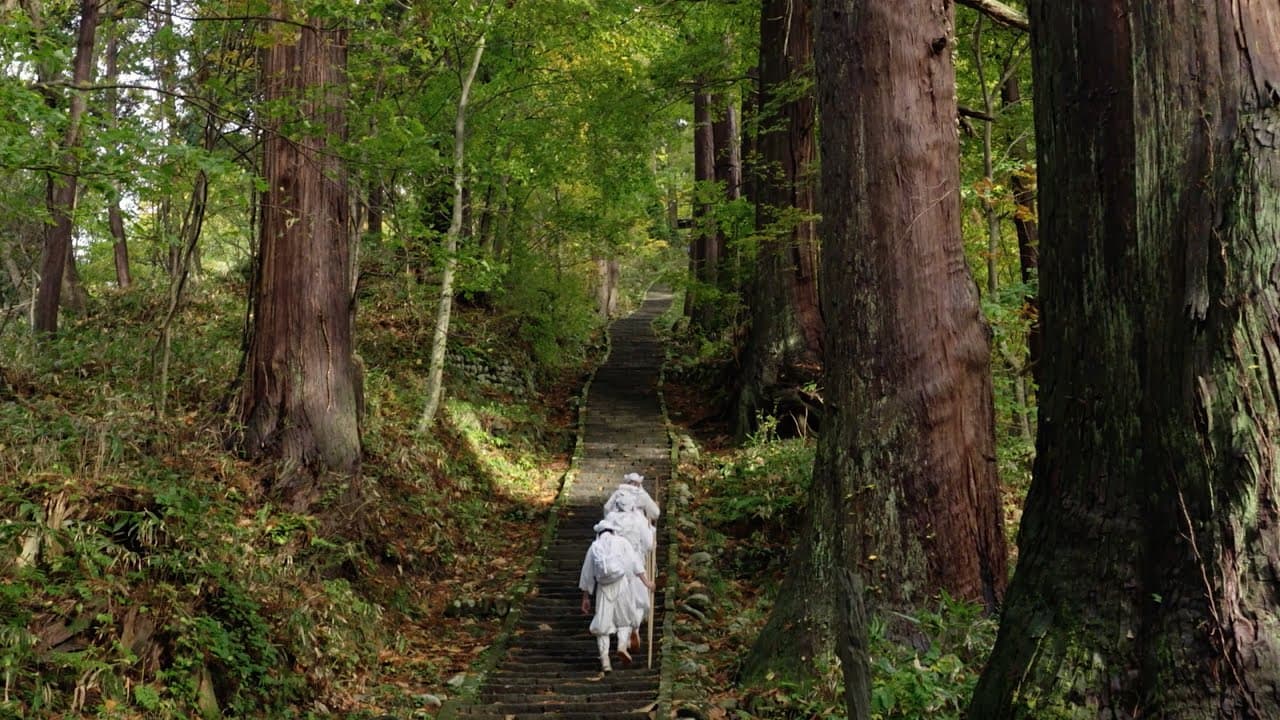
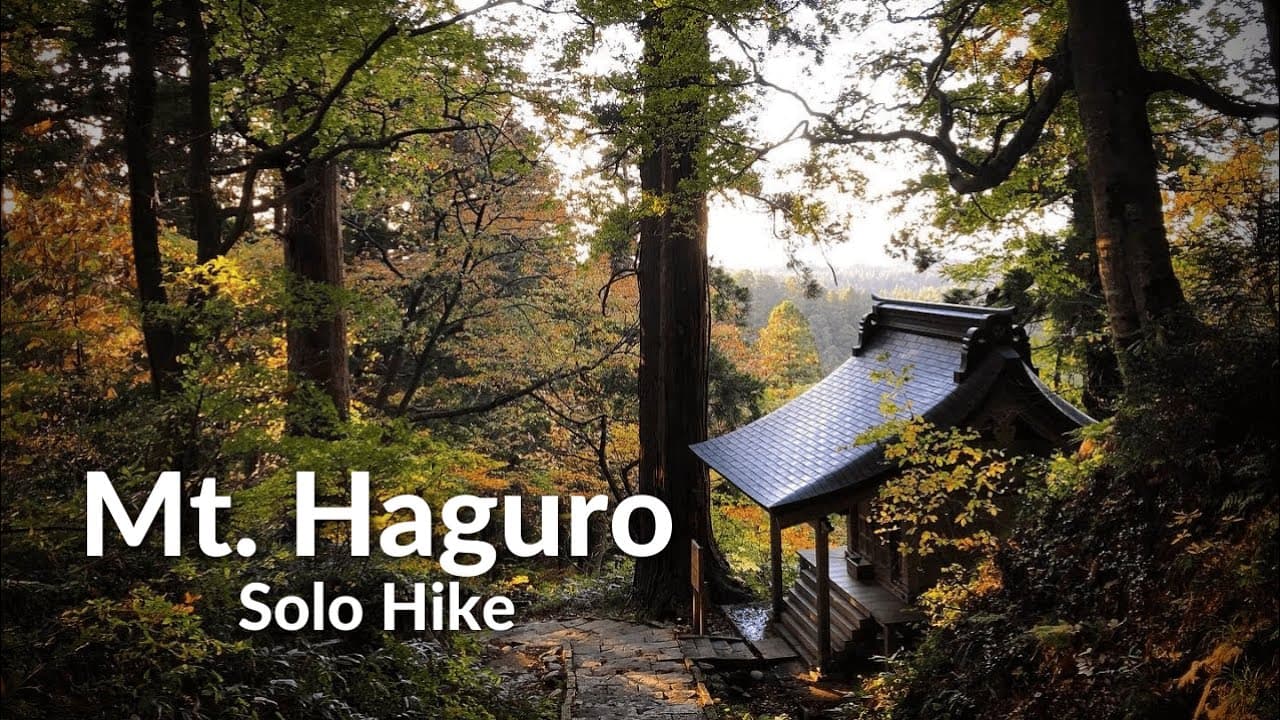
Mount Haguro (羽黒山, Haguro-san) is one of the Three Mountains of Dewa in the city of Tsuruoka, the ancient province of Dewa (a domain consisting of modern-day Yamagata Prefecture and Akita Prefecture), Japan. Dewa Shrine is located on Mount Haguro.
Mount Hakone
Nature箱根山
Mount Hakone (箱根山, Hakoneyama), with its highest peak Mount Kami (1,438 meters), is a complex volcano in Kanagawa Prefecture, Japan that is truncated by two overlapping calderas, the largest of which is 10 × 11 km wide. The calderas were formed as a result of two major explosive eruptions about 180,000 and 49,000–60,000 years ago. Lake Ashi lies between the southwestern caldera wall and a half dozen post-caldera lava domes that arose along a southwest–northeastern trend cutting through the center of the calderas. Dome growth occurred progressively to the south, and the largest and youngest of them, Mount Kami, forms the high point of Hakone. The calderas are breached to the east by the Haya River canyon.
Mount Hijiri
Nature聖岳
mountain in Nagano Prefecture, Japan
Mount Hiragatake
Nature平ヶ岳
Mount Hiragatake (平ヶ岳, Hira-ga-take) is one of the 100 Famous Japanese Mountains. It lies on the border between Gunma and Niigata prefectures.
Mount Hiru
Nature蛭ヶ岳
Mount Hiru (蛭ヶ岳 Hiru-ga-take) is the tallest mountain of the Tanzawa Mountains with a height of 1,675 metres (5,495 ft).
Mount Hiuchi
Nature火打山
Mount Hiuchi (火打山, Hiuchi-yama) is one of the 100 Famous Japanese Mountains, reaching the height of 2,462 m (8,077 ft). It is situated in Japan's Kubiki Mountains in Niigata Prefecture. It was specified for Jōshin'etsu Kōgen National Park on July 10, 1956, but since has been absorbed by the Togakushi-Renzan National Park, which encompasses Mount Myōkō (妙高山 Myōkō-san) and Mount Niigata-Yake (新潟焼山 Niigata-Yakeyama).
Mount Hongu
Nature本宮山
Mount Hongū (本宮山, Hongū-san) is a mountain located on the border of three cities in Aichi Prefecture, Toyokawa, Okazaki, and Shinshiro.
Mount Hoo
Nature鳳凰山
Mount Hōō (鳳凰山, Hōō-zan) is located in the western portion of Yamanashi Prefecture, Japan. Because the mountain has three peaks, it is also called Hōō Sanzan (鳳凰三山). It is in Minami Alps National Park and is one of the 100 Famous Japanese Mountains.
Mount Iino
Nature飯野山
Mount Iino (飯野山, Iino-yama) is a 422-metre-high (1,385 ft) mountain on the border of Sakaide and Marugame in Kagawa Prefecture, Japan.
Mount Ikoma
Nature生駒山
Mount Ikoma (生駒山, Ikoma-yama) is a mountain on the border of Nara Prefecture and Osaka Prefecture in Japan. It is the highest peak in the Ikoma Mountains with a height of 642 meters. Mount Ikoma is a part of Kongō-Ikoma-Kisen Quasi-National Park. It is one of the most famous picnic spots in the Kansai region. On the top of the mountain, there are many TV towers for broadcasting to the Kansai region and Ikoma Sanjo Amusement Park.
Mount Inasa
Nature稲佐山
Mount Inasa (稲佐山, Inasa-yama) is a hill to the west of Nagasaki which rises to a height of 333 metres (1,093 ft). The Nagasaki Ropeway and the Nagasaki Inasa Mountain Slope Car (in Japanese) allow visitors to easily travel to the summit. A short walk from the top ropeway and slope car stations (adjacent to each other) is Mt. Inasa Overlook, a multi-level observation deck with "360-degree panoramic view" from the rooftop. Nagasaki's night view was certified as one of the "World's New Three Great Night Views" by the Night View Summit held in 2021, organized by the Night View Tourism Convention Bureau.
Mount Ishizuchi
Nature石鎚山
Mount Ishizuchi (石鎚山, Ishizuchi-san) is a 1,982-metre-high (6,503 ft) mountain on the border of Saijō and Kumakōgen, in Ehime, Japan. This mountain is one of the 100 famous mountains in Japan. It is the highest mountain in Western Japan and the island of Shikoku. It is regarded as a sacred mountain. Once upon a time it was a stratovolcano with large scale magma activity.
Mount Iwate
Nature岩手山
Mount Iwate (岩手山, Iwate-san) is a stratovolcano complex in the Ōu Mountains of western Iwate Prefecture, in the Tōhoku region of northern Honshū, Japan. With an elevation of 2,038 metres (6,686 ft), it is the highest in Iwate Prefecture. It is included as one of the 100 famous mountains in Japan, a book composed in 1964 by mountaineer and author Kyūya Fukada. The mountain is on the borders of the municipalities of Hachimantai, Takizawa, and Shizukuishi, west of the prefectural capital of Morioka. Much of the mountain is within the borders of the Towada-Hachimantai National Park.
Mount Izumi Katsuragi
Nature和泉葛城山
Mount Izumi Katsuragi (和泉葛城山, Izumi Katsuragi-san) is a mountain in the Kongō Range straddling the border between Osaka and Wakayama Prefectures in Japan. Its peak elevation is 858 metres (2,815 ft).
Mount Jinba
Nature陣馬山
Mount Jinba (陣馬山, Jinba-san) is located between Hachiōji, Tokyo and Sagamihara, Kanagawa Prefecture. Its peak is roughly 857 m (2,812 ft) above sea level.
Mount Kanmuri
Nature冠山
Mount Kanmuri (冠山, Kanmuri-yama) is a mountain located on the border between Gifu and Fukui prefectures in the Chūbu region of Japan. It is 1,256.6 m (4,123 ft) tall and part of the Ryōhaku Mountains. It is also the source of the Ibi River. The mountain peak has a small area that can only hold about 10 people, but it offers an unobstructed 360-degree panoramic view. There is also a triangulation station on the peak.
Mount Kinbo
Nature金峰山
Mount Kinbō (金峰山, Kinbō-san) or Mount Kinpō (金峰山, Kinpō-san) is a stratovolcano in the west of Kumamoto city, Kumamoto Prefecture, Japan. It is an extinct stratovolcano and lava dome. Mount Kinbō overlooks the city of Kumamoto and is used for sightseeing and for radio and TV broadcast antennas.
Mount Kinka
Nature金華山
Mt. Kinka (金華山, Kinka-zan), also known as Kinkazan, is located in the heart of the city of Gifu, Gifu Prefecture, Japan, and rises to a height of 329 m (1,079 ft). Previously called Mt. Inaba (稲葉山, Inaba-yama), it has long served as the representative symbol of Gifu. It stands along the Nagara River, creating bountiful nature within the city.
Mount Kinpu
Nature金峰山
mountain in Yamanashi Prefecture, Japan
Mount Kisokoma
Nature木曽駒ヶ岳
Mount Kisokoma (木曽駒ヶ岳, Kisokoma-ga-take) is a mountain located in Miyada, Kamiina District, and Kiso and Agematsu, Kiso District, Nagano Prefecture, in the Chūbu region of Japan. It is 2,956 m (9,698 ft) tall and is the tallest peak in the Kiso Mountains. It is also included on the list of "100 Famous Japanese Mountains." Sometimes its name is just shortened to Kisokoma. Alternative kanji for the name are 木曾駒ヶ岳 (Kisokoma-ga-take).
Mount Kobushi
Nature甲武信ヶ岳
mountain in Japan
Mount Komaki
Nature小牧山
Mount Komaki (小牧山, Komakiyama) is an 86 m-high (282 ft) mountain located in the city of Komaki, Aichi Prefecture, Japan. At one point, the mountain was topped with the original Komakiyama Castle, built by Oda Nobunaga. Its base stretches for nearly 600 m (1,969 ft) from east to west, and 400 m (1,312 ft) from north to south, covering an area of approximately 21 ha (52 acres). The mountain is now a historical park, containing various castle ruins, including water wells and stone walls, in addition to artifacts dating further back. Though known for the sakura trees, the northern part of the mountain is home to many Machilus thunbergii trees.
Mount Kongo
Nature金剛山
mountain in Osaka and Nara Prefecture, Japan
Mount Kurai
Nature位山
Mt. Kurai (位山, Kurai(-san); lit. 'throne mountain') is located on the border of the cities of Takayama and Gero in Gifu Prefecture, Japan. The mountain also separates the watersheds of the northern and southern portions of the Hida region. The Jinzū River flows to the north and the Hida River flows to the south.
Mount Miminashi
Nature耳成山
mountain in Japan
Mount Minamikoma
Nature南駒ヶ岳
Mount Minamikoma (南駒ヶ岳, Minamikoma-ga-take) is a mountain located on the border between Okuwa, Kiso District, and Iijima, Kamiina District, Nagano Prefecture, in the Chūbu region of Japan. It is 2,841 m (9,321 ft) tall and part of the Kiso Mountains.
Mount Misen
Nature弥山
Mount Misen (弥山, Misen) is the sacred mountain on Itsukushima in Hatsukaichi, Hiroshima, Japan, and is the highest mountain on the island at 535 m; it is situated within the World Heritage area of Itsukushima Shrine. The sea around the island (Seto Inland Sea) and all of the island are within Setonaikai National Park. The north side of the mountain is covered by primeval forest which is protected by Hiroshima prefecture. The foot of the mountain has Momijidani-Kōen (紅葉谷公園, Maple Valley Park). According to the website of Miyajima Tourist Association, Mount Misen was visited by Kūkai in the year 806, the 1st year of the Daidō era.
Mount Mitake
Nature御岳山
Mount Mitake (御岳山, Mitake-san) is a mountain in the Chichibu Tama Kai National Park near Tokyo, Japan. It stands 929 m (3,048 ft) tall. On the mountain is a Shinto shrine where practices such as Futomani divination take place. It is one of the many highlights of the Chichibu Tama Kai National Park, which covers more than 1,250 km2 (483 mi2) of forested mountains, hills, gorges and some rural towns in the prefectures of Yamanashi, Saitama, Nagano and Tokyo. The trip from Tokyo's Shinjuku Station to Mitake Station on the Ōme Line takes about 95 minutes.
Mount Miwa
Nature三輪山
Mount Miwa (三輪山, Miwa-yama) or Mount Mimoro (三諸山, Mimoro-yama) is a mountain located in the city of Sakurai, Nara Prefecture, Japan. It has been an important religious and historical mountain in Japan, especially during its early history, and serves as a holy site in Shinto. The entire mountain is considered sacred, and is home to one of the earliest Shinto shrines, Ōmiwa Shrine. Several burial mounds from the Kofun period can be found around the mountain. The kami (spirit) generally associated with Mount Miwa is Ōmononushi (大物主) (Ōmono-nushi-no-kami), a rain kami.
Mount Moiwa
Nature藻岩山
Mount Moiwa (藻岩山, Moiwayama) is a mountain located about 5 km (3 mi) southwest of the center of Sapporo, Hokkaido and 6 km (4 mi) southwest of Sapporo Station. A ropeway and a motorway pass through Mt. Moiwa, and an observatory and a ski resort in winter make it a resort for Sapporo citizens and tourists.
Mount Myogi
Nature妙義山
mountain in Gunma Prefecture, Japan
Mount Nasu
Nature那須岳
Mount Nasu (那須岳, Nasu-dake) is a group of complex volcanoes located in the northeast part of Nikkō National Park, Japan. The tallest peak is Sanbonyari Peak at a height of 1,916.9 m (6,289 ft). Mount Nasu is one of the 100 Famous Japanese Mountains.
Curated Articles
View all →


Can't decide? Let AI help.
Tell us your preferences and get a personalized itinerary in 2 minutes.
Get a Free AI Trip Draft